Cattle die, and kinsmen die,
And so one dies one’s self;
One thing I know that never dies.
The fame of a dead man’s deeds.
— Hávamál, 78
(Transl. by H. Adams Bellows, 1936)
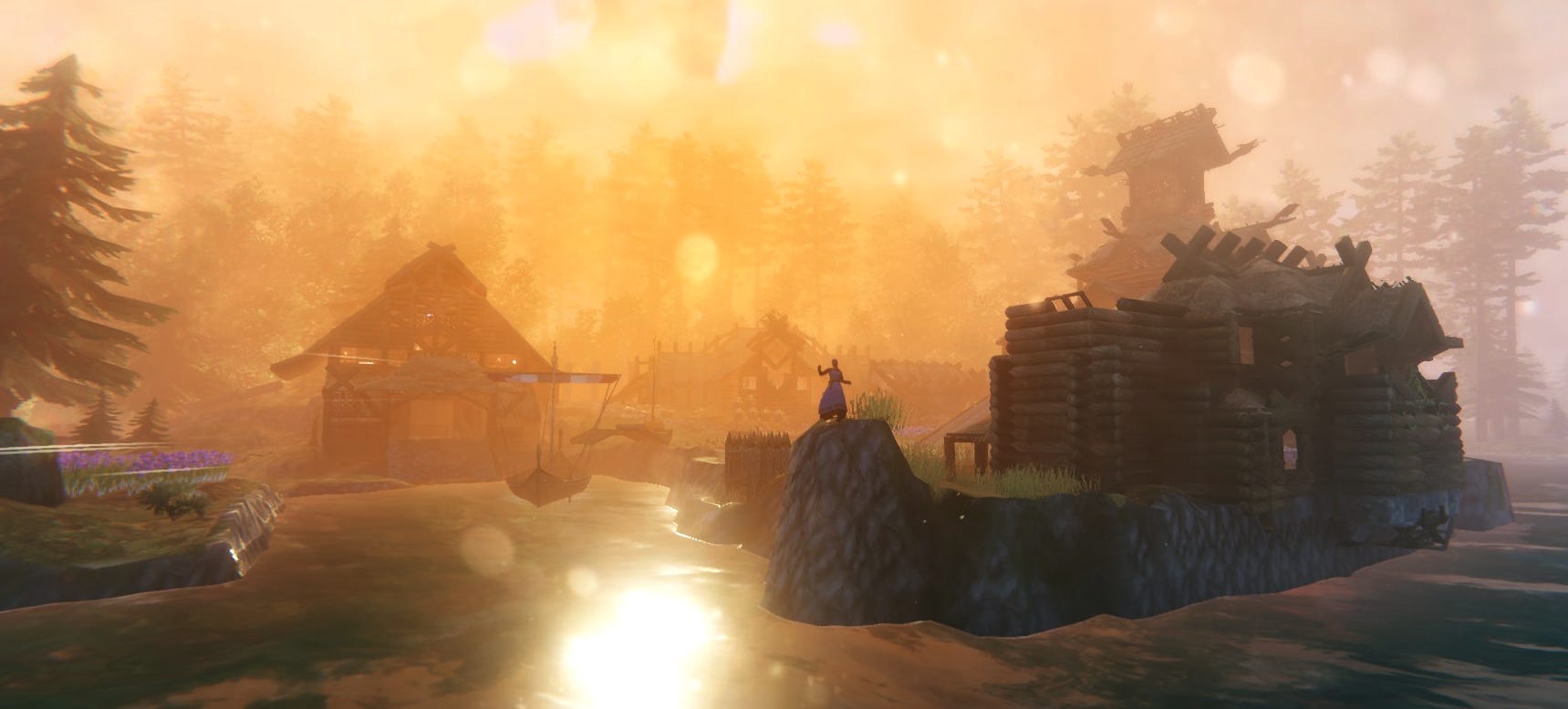
How does a game with retro, low-poly graphics and a tiny development team capture the minds of millions? The secret of the Swedish hit Valheim, which sees its full 1.0 release on September 9, 2026, lies not just in its engaging survival loop but in its masterfully integrated cultural codes. While many studios treat mythology as mere “cosmetic skin,” Iron Gate turned Old Norse thanatology—the study of death and the afterlife—into the very core of their gameplay and world design.
As a cultural studies scholar who dedicated a Ph.D. dissertation to reconstructing Old Norse beliefs about death, and having spent over 4,700 hours exploring the Tenth World as a gamer, I see Valheim as a flawless masterclass in environmental storytelling. It shows exactly how local folklore can be transformed into a universally understood game design language—a lesson that is crucial for any developer looking to work with national cultural codes.
The Mythic Anatomy of a Dead Protagonist
Much like Johnny Depp’s character in the Dead Man (1995) movie, our character is dead from the very first frame. But here, we are told this explicitly: as a bird-like Valkyrie carries us in her talons above forests and fields beneath storm clouds, we are reminded that we are an einherjar—a fallen warrior rightfully awaited in the banqueting halls of Valhalla, where Odin the Allfather drinks and feasts with other heroes. At the same time, we are told that waiting for that reward right now is futile, because far more important battles await us here, in the Tenth World, known as Valheim: the “Realm of the Slain”.
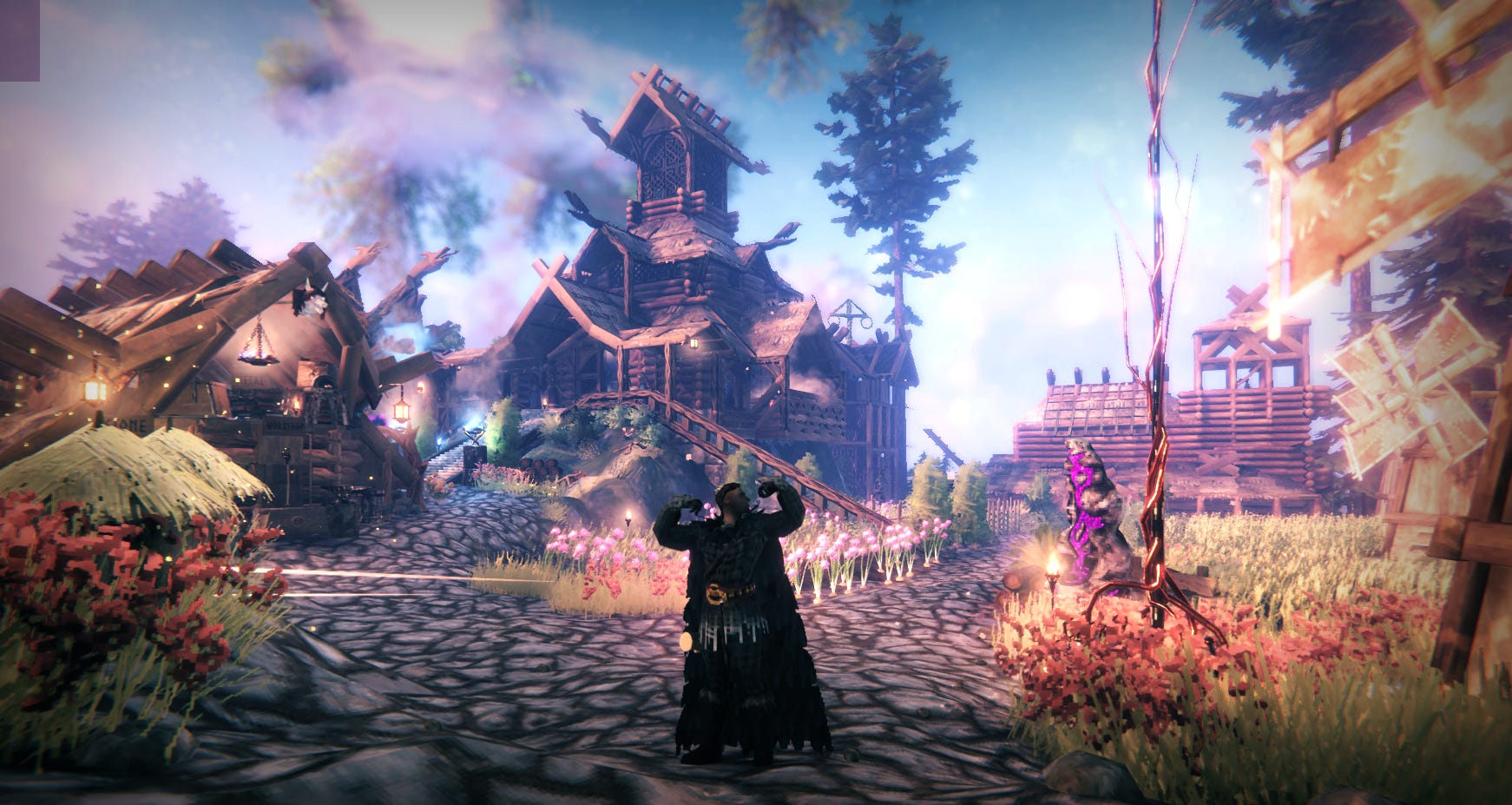
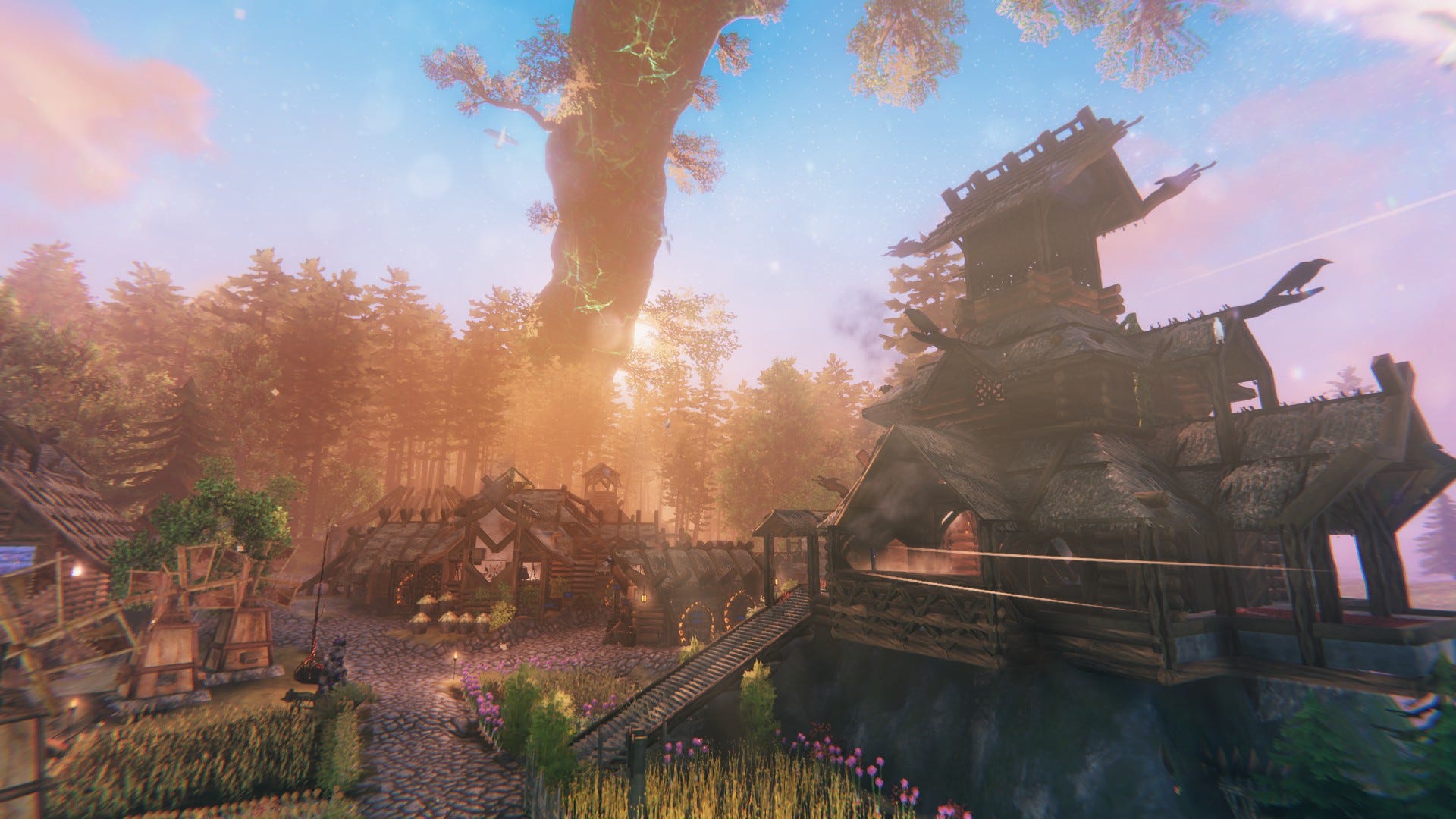
The developers’ approach captivates you from the start: they don’t spoon-feed you the world’s history. Instead, they give you a certain given reality that the Vikings once lived with—about Valhalla, the feud between the Æsir gods and the Jotnar giants, and the nine worlds wrapped around the cosmic ash tree... What is more, they never let you forget it: even when standing in an open field under the sky, high above the clouds, you can glimpse the ghostly grandeur of Yggdrasil’s cosmic branches. It is especially vivid at night, but it remains visible during the day, even serving as a compass pointing from West to East.
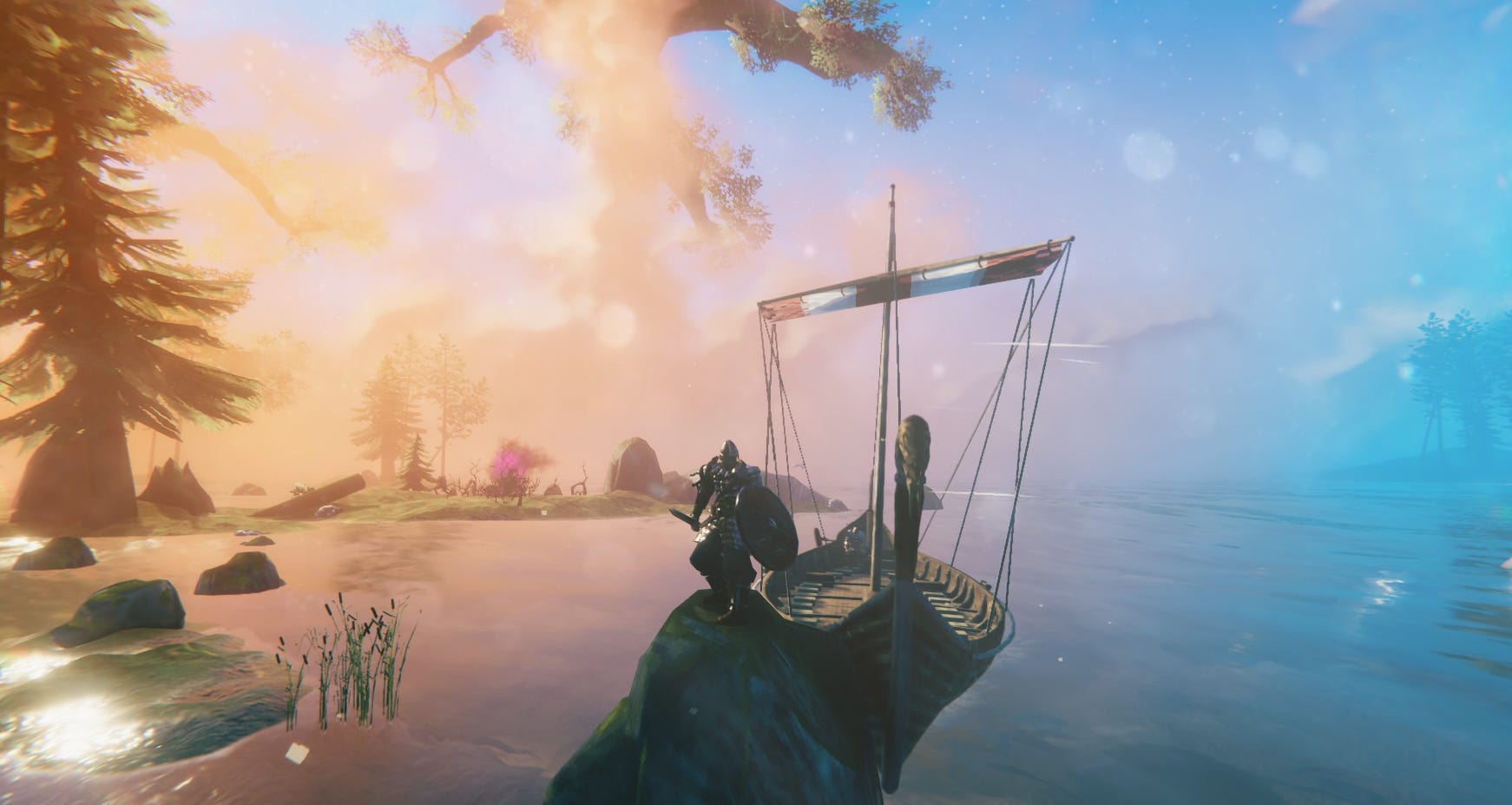
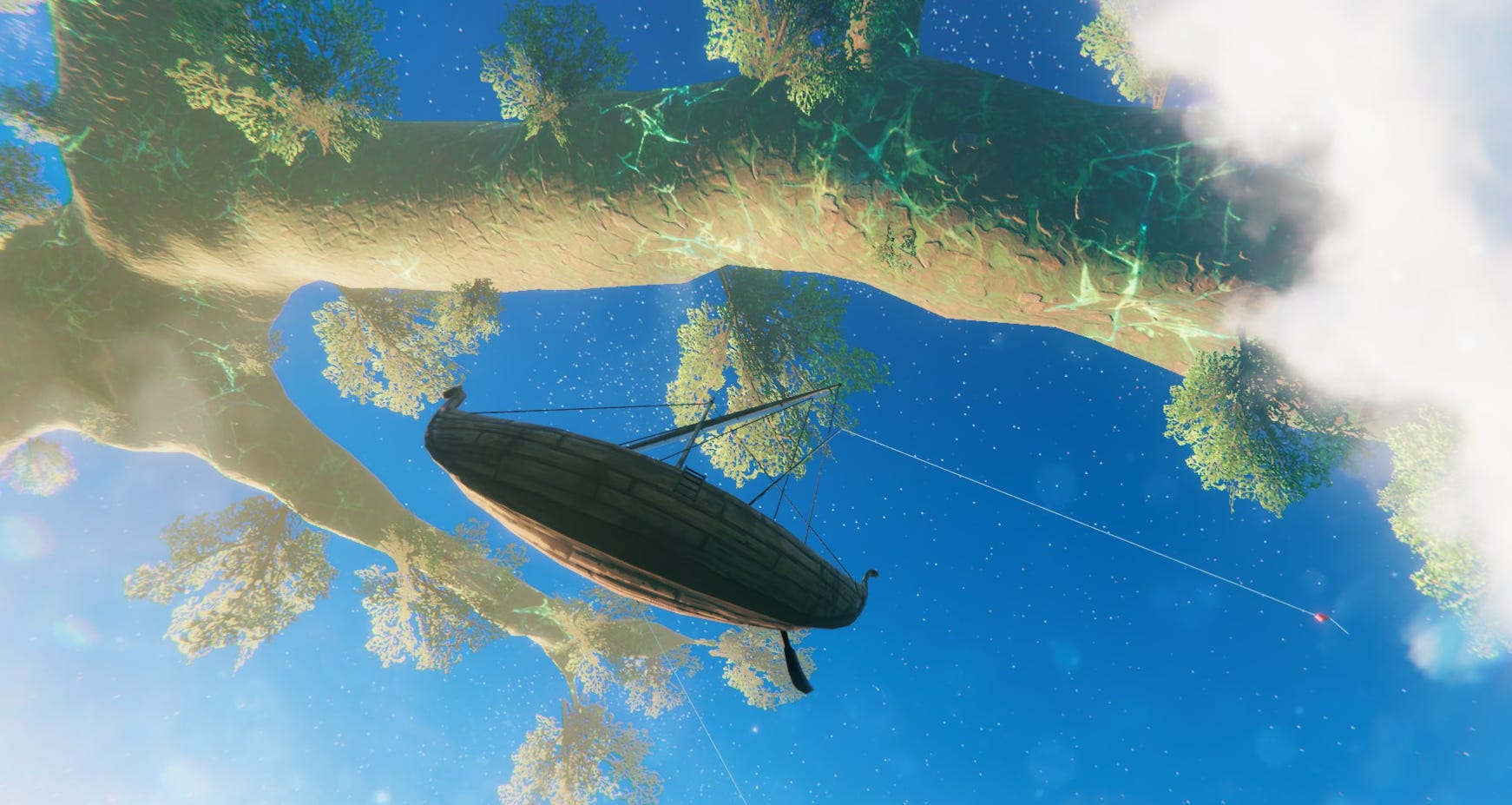
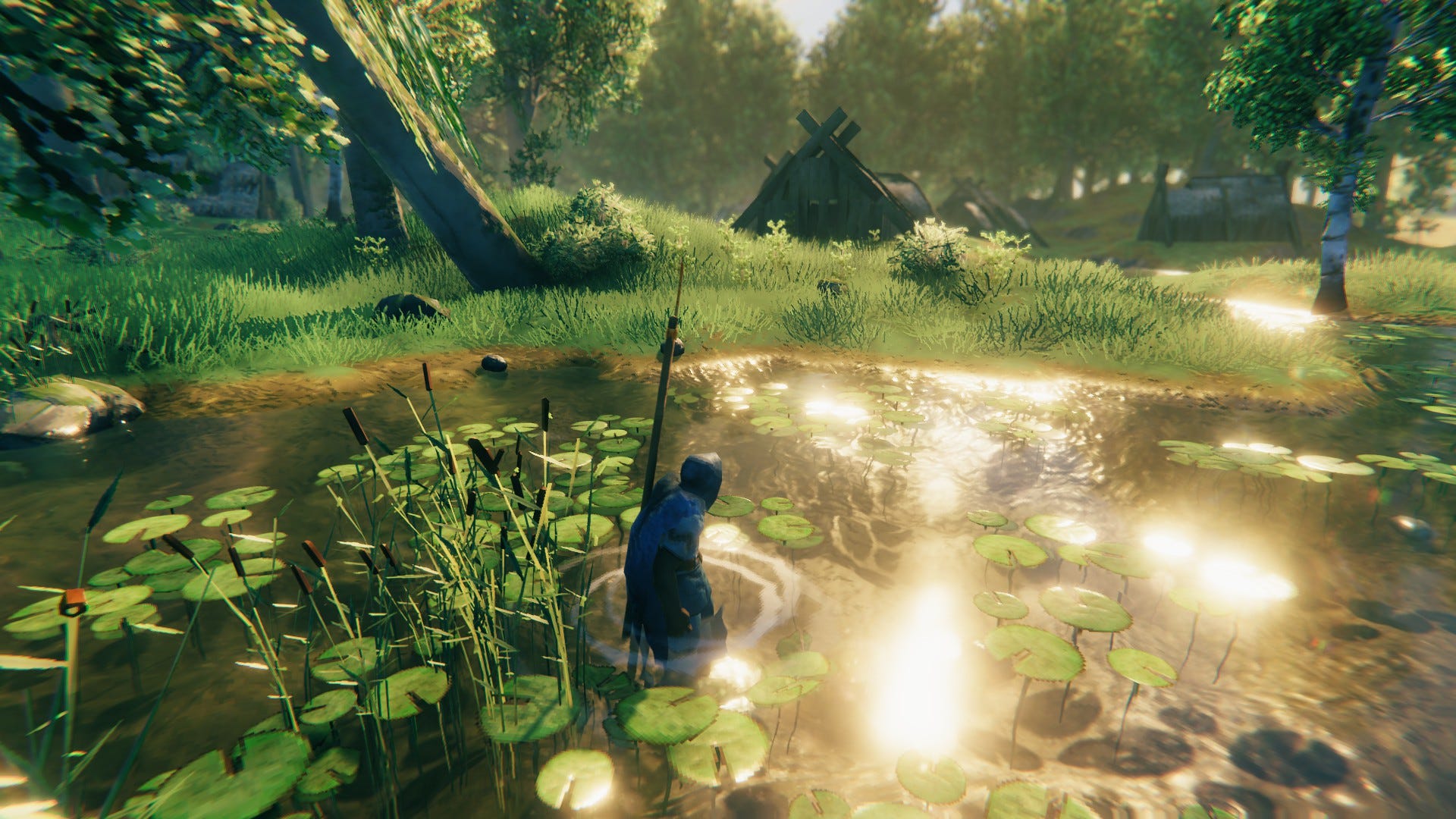
The game’s graphics are intentionally simplified, yet its detailed, procedurally generated geography—complete with naturalistic lighting and the rhythmic slosh of water—evokes a powerful sense of plausible immersion. Until the arrival of the extreme Ashlands biome in 2024, Valheim stood as a gold standard for survival-builder games centered primarily on free exploration. On this playground, it is impossible not to notice the structural legacy of trailblazers such as Minecraft (2009) and No Man’s Sky (2016), which pioneered procedural generation in sandboxes. Each world iteration (seed) allows us to embark on a fresh journey to map out horizons and discover ancient artifacts scattered across the land.
Feathers and Entrails: Deconstructing Odin’s Avian Messengers
One might recall an interview with Scandinavian historian Anders Winroth, who back in 2021 was questioned about the historical accuracy of Valheim’s world (Winroth, 2021). On the one hand, he immediately praised the material culture and daily life, which the Swedish developers recreated with meticulous attention to detail (from seafaring vessels to the absolutely enchanting modular house-building mechanics).
On the other hand, for some reason, he laughed at the ghostly bird-woman shown at the beginning who delivers us to the sacrificial altar, claiming that “Vikings hardly imagined their Valkyries that way.” Without wishing to disappoint a colleague, there are plenty of references indicating that in archaic legends, Valkyries were precisely envisioned as large, avian, crow-like creatures that enjoyed tearing through the entrails and blood of men.
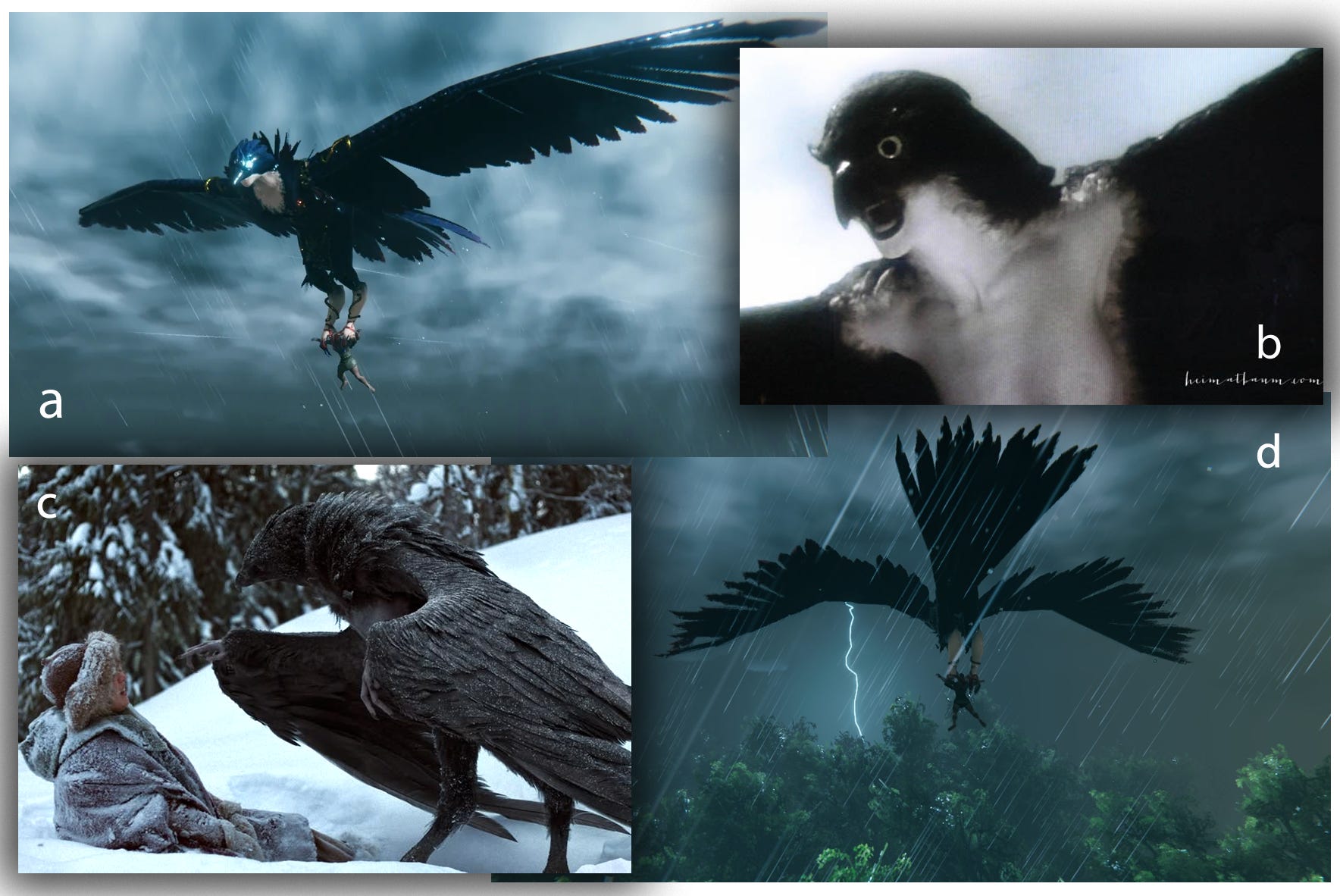
Swedish folklore has preserved similar concepts in creatures like Drudes or Vildvittras. Astrid Lindgren included them in her famous 1981 tale Ronia, the Robber's Daughter. The 1984 Swedish film adaptation and the recent Netflix show both demonstrate exactly this type of ornithomorphic (bird-like) imagery [ill. 05 b, c]—the very same look the game’s creators bestowed upon their Valkyries [ill. 05 a, d], the messengers of Odin (and their fallen versions of Mistlands as well). This stands in stark contrast to the ladies in winged helmets of Richard Wagner’s operas, which heavily distorted the image of Valkyries in popular perception. Really, the ominous Harpies of Greek myth and the blood-soaked crow-women of Ireland—the war goddesses Badb and Morrígan—are not just closer to authentic Valkyries, but are clearly their regional counterparts.
Runestones: Folklore or Absolute Truth?
Local landscape, saturated with ominous antiquities, naturally channels the profound atmospheric weight found in Professor Tolkien’s descriptions of Middle-earth. In Valheim, these antiquities are omnipresent, carrying immediate contexts of death and the afterlife. The structures are modeled after real Megaliths of Northern Europe: Bronze and Stone Age stone circles (cromlechs), menhirs, and dolmens.
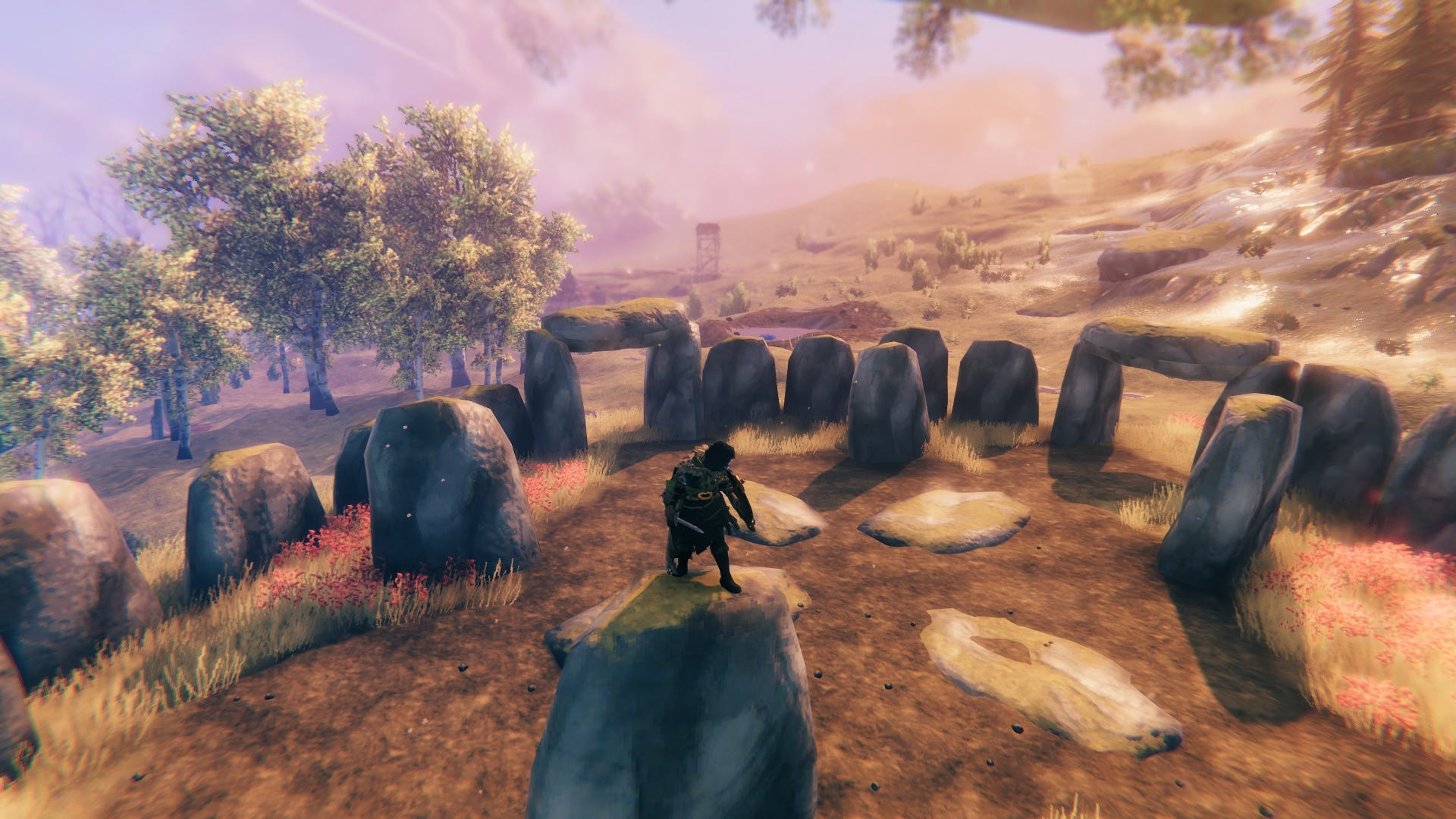
A distinct category of environmental storytelling is represented by runestones. Occasionally, they carry a peculiar brand of folklore left behind by our predecessors—the failed einherjar who were dispatched with the exact same mission but ultimately blundered. Reading these stones reveals the history of the land and the people who once inhabited it. Studying this lore is highly instructive. However, I am personally convinced that certain “facts” on these stones are merely the speculations of those fallen predecessors rather than absolute, objective truths dictated directly by the developers.
Nevertheless, this is how we learn that Valheim was originally one of the worlds anchored to the Cosmic Tree. These were the days of the Golden Age, a time before humanity existed, when the Dvergar (dwarves) competed with the Thursar (giants), the elves fought the trolls, and the Æsir gods clashed with both the divine Vanir and the mighty Jotnar. After his ultimate victory, Odin cast his eight most fierce and powerful enemies down into this Tenth World, severed it from the branches of Yggdrasil, and cast it adrift into the cosmic void. Yet over the subsequent millennia, humans repeatedly drifted through the barrier. And they were not alone.
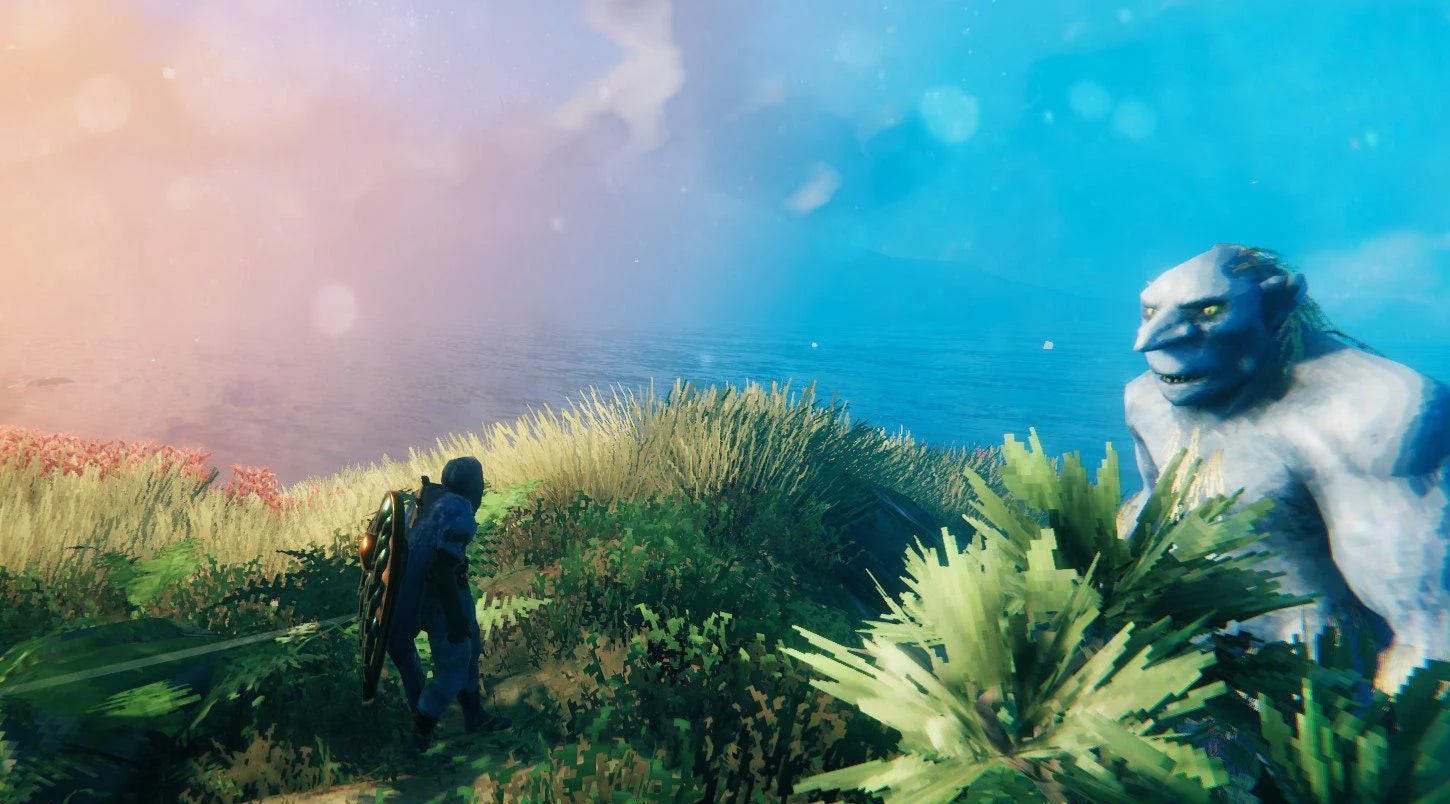
Here, an independent socio-cultural evolution took place. Diverse populations grew, farmsteads and villages multiplied, and some of the exiled Jotnar bosses (Jotnarne) even took entire tribes under their wing, assuming the mantle of local deities. This was the fate of the sorcerer Yagluth, worshiped by the goblin-like fulings on the Plains (Slätterna), and of Fader, ruler of the Kingdom of the Emerald Flame (Den Smaragdgröna Flamman) in the far volcanic South.
The highlanders merit a separate mention. From ancient times, they chose the demonic vargr Fenrir—forever chained in the realm of the gods—as their eternal patron [*].
* It is worth noting that the archaic Norse word vargr signified primarily a non-human monster to the Vikings: a werewolf or an outcast—as opposed to the zoological concept of úlfr (wolf), though wolves are inherently linked to it. Interestingly, in modern Swedish, these two concepts have flipped roles.
For their betrayal, Odin and the Æsir cursed the adherents of this Wolf Cult with a half-beastly nature. From that moment on, their existence became neither life nor death—mirroring authentic folklore legends of werewolves. The runestones and petroglyphs found inside mountain caves illustrate the tragic fate that befell these highlanders, but this essay focuses on a different sort of death.
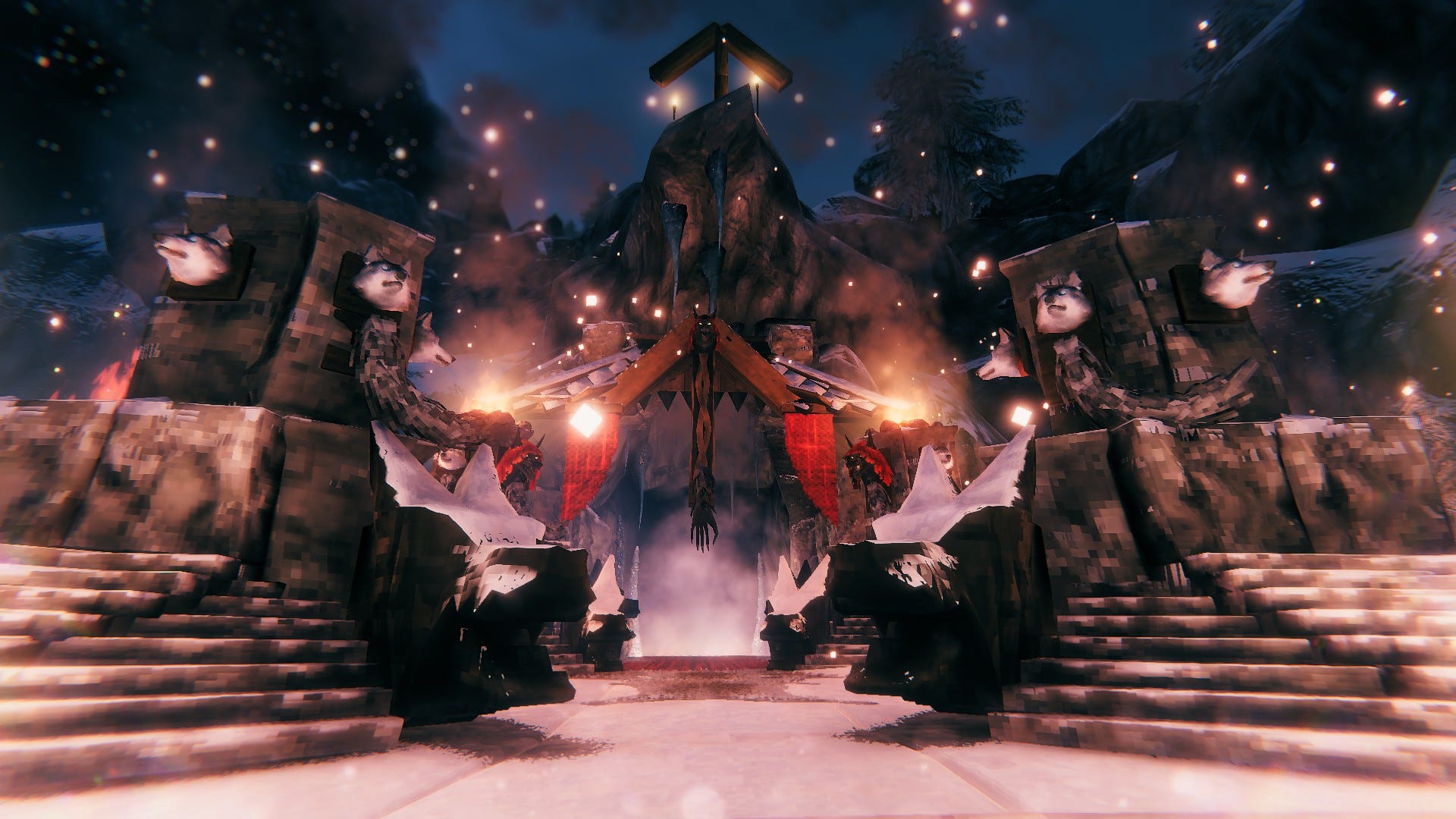
Greydwarfs as the “Unclean Dead”
According to the lore records, the rest of the local populations were simply too fiercely independent, which brought severe consequences. Runestones note that the inhabitants of the abandoned farmsteads in the Meadows (Ängarna) and the Black Forest (Svarta skogen) were exceedingly prideful and rejected the will of the gods. Consequently, their bones find no rest in their ancestral barrows. Meanwhile, out from the thickets charge the “shepherds of the forest wildlife”—the Greydwarfs.
In the Swedish original, they are called Grådvärgar, a name that attentive readers of Astrid Lindgren’s Ronia, the Robber's Daughter will instantly recognize as the dangerous denizens of the nocturnal woods.
A particularly telling description of their sinister nature is carved into one of Valheim’s runestones: it states that they form from the rot surrounding the corpse of a treacherous murderer, drawing rock, wood, and moss to the site, eventually sprouting under the rain into a cyst containing a twisted pupa. In ethnographical terms, this makes them textbook examples of the “unclean dead” (or the earthbound dead known as 'zalozhni merci' in Ukrainian folklore)—wooden golems trapped by the natural magic of the Vanir because the earth refused to accept their wicked souls.
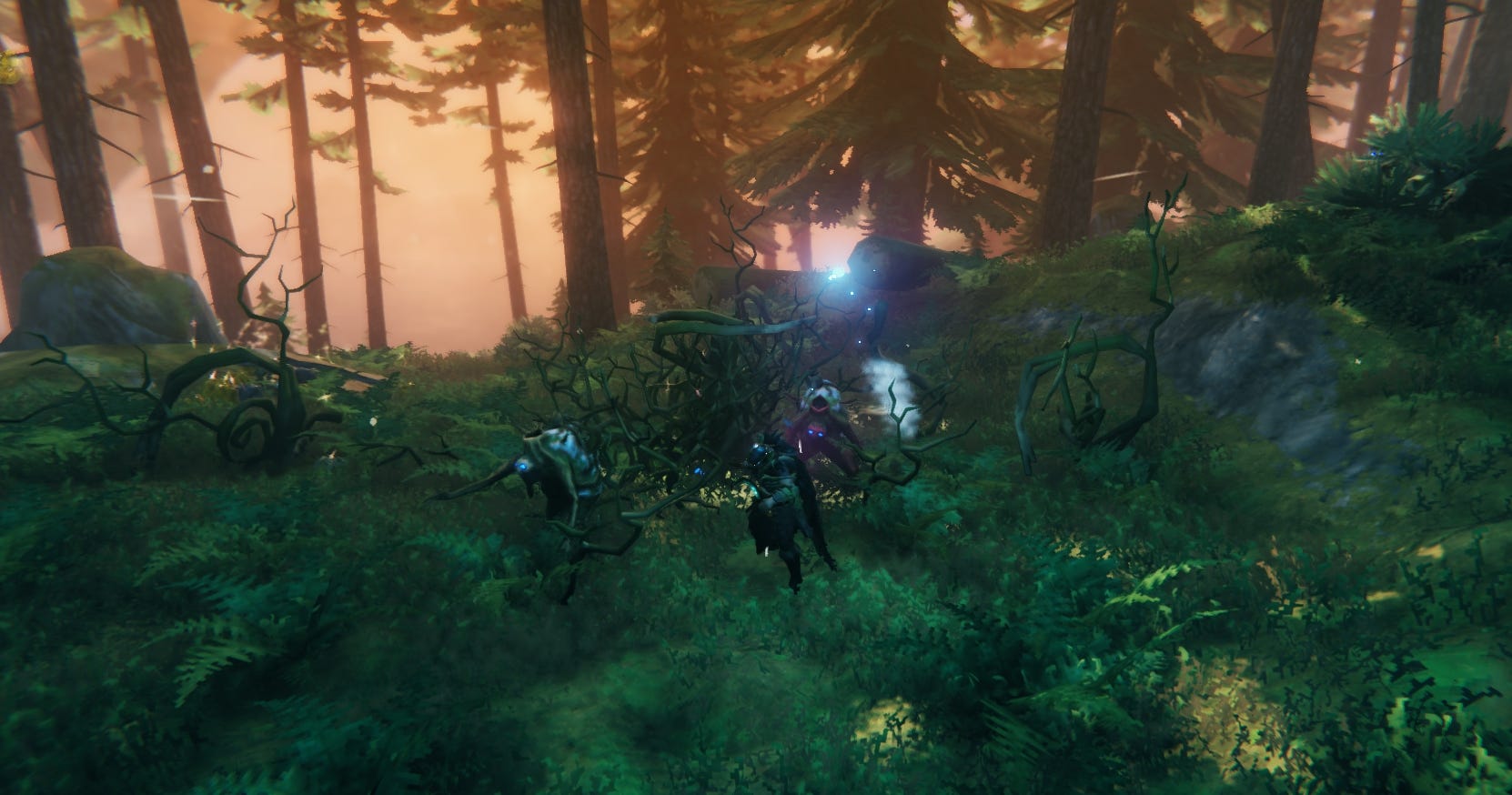
Fascinatingly, these forest-dwelling Greydwarfs and the Skeletons guarding the tombs are sworn enemies, clashing the very moment they cross paths—a behavior pattern that players frequently exploit. This magical transmutation of the “unclean dead” into wooden automatons is bound to the sorcery of the Elder (Den Äldre), a Jotunn who is essentially a living offshoot of Yggdrasil ash-tree itself. Along with Eikthyr—the cosmic stag of Valhalla—these first two bosses represent the deities of the Vanir, the primordial guardians of untamed nature. This explains why their servants attack anyone hunting game or simply logging timber for building needs. Skeletons, on the other hand, readily pivot to hunting them back, a mechanic players love to trigger.
Once again, one cannot help but marvel at how tightly the game’s narrative tracks the deep-seated patterns of Viking Age mythology. The Eddic cosmogony in the Völuspá (The Prophecy of the Seeress) describes how the Æsir gods first tamed the world by literally culturalizing it: establishing homesteads, forging tools, and smelting metal. It was this industrial overreach that drove the Vanir to wage war against them. And yet, this is precisely what the player is forced to do here! The hero must build a dwelling from scratch, mastering new recipes for tools and hunting gear. This expansion inevitably triggers a violent clash with the forces of nature embodied by the first two bosses and their minions.
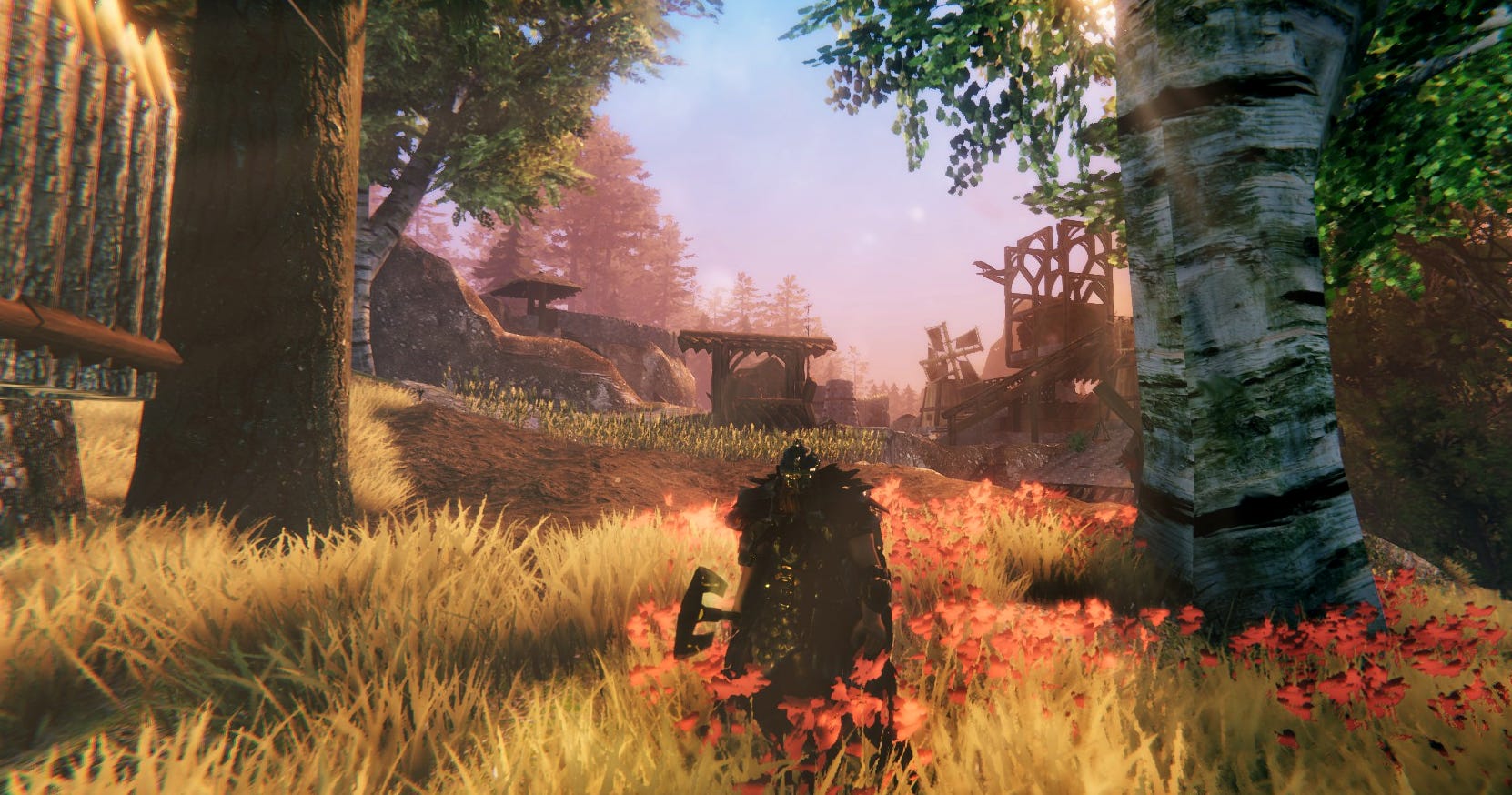
Draugar: The Drowned Civilizations of the Swamp
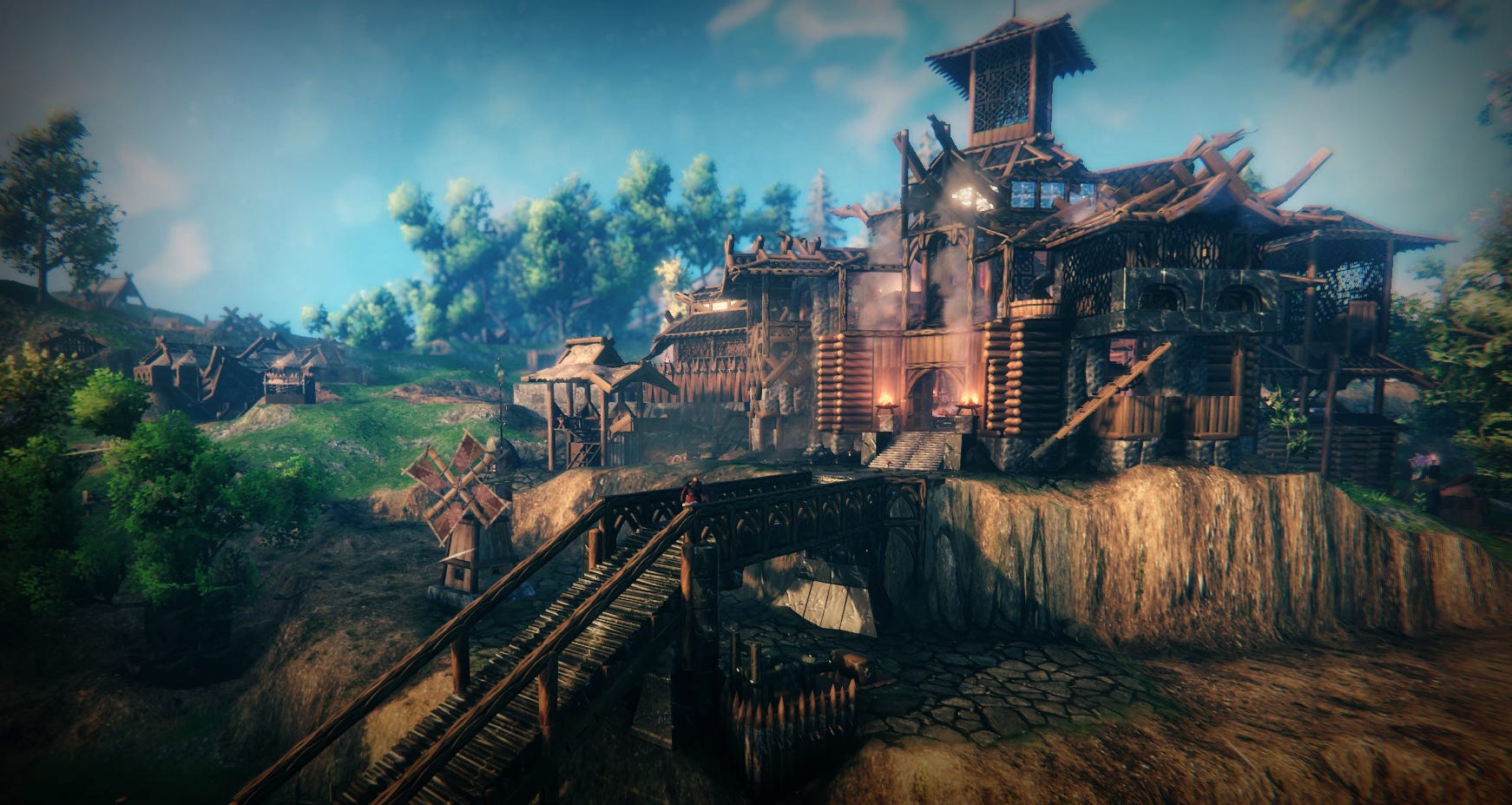
Thus, while one group of prideful mortals was twisted into guardians of the wild, another was stripped of ancestral peace within their family tombs. But there was an even more stubborn breed of “pride-mongers”: those who erected stone towers and castle walls throughout the forests, valleys, and mountains. Those valleys have long since been swallowed by the Swamps (Träsk). Runestones in the miasma reveal that these people did not merely turn away from the gods; they viewed themselves as equals to the Æsir and openly challenged them.
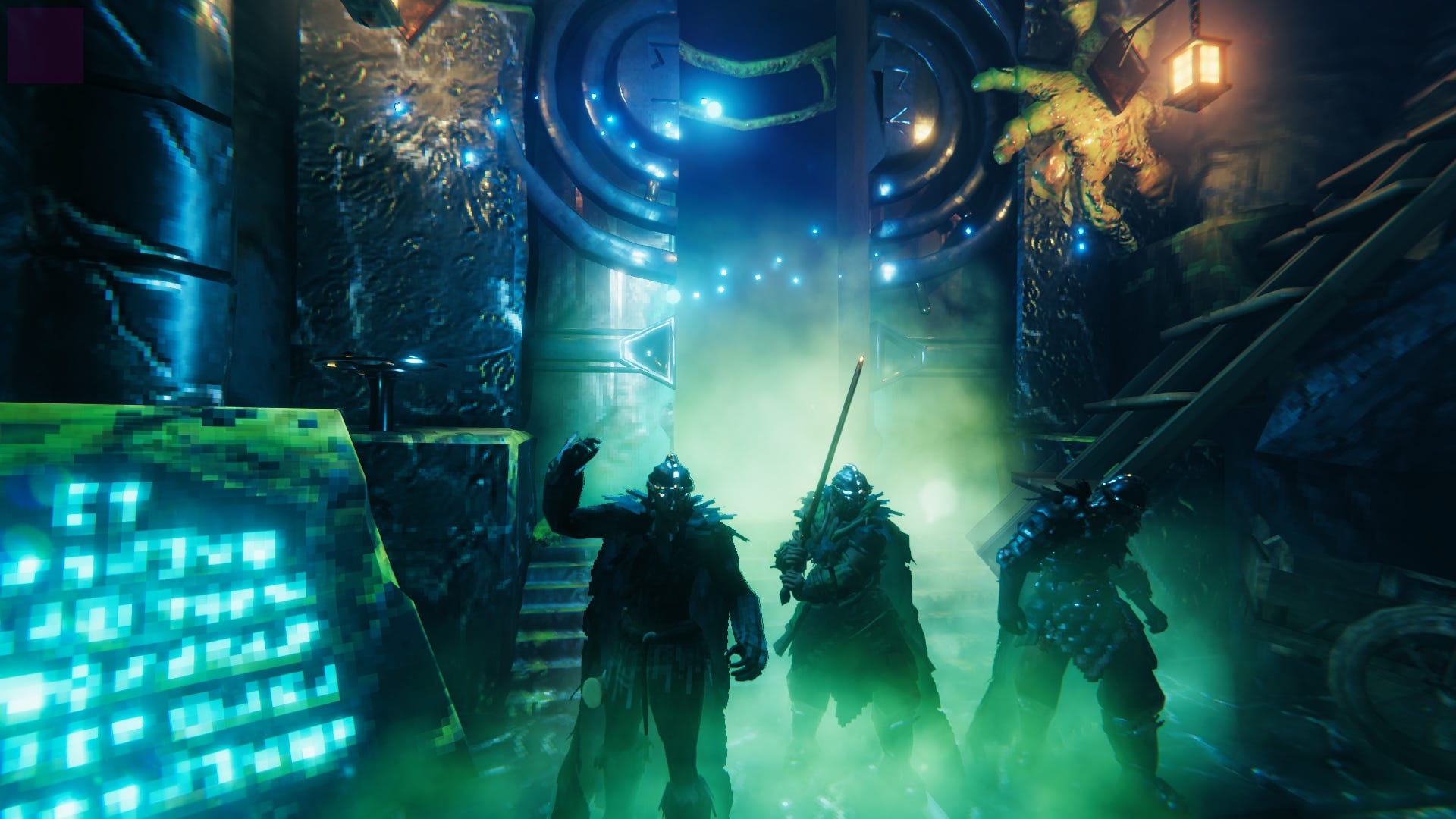
Odin’s exact method of execution for this treason remains ambiguous. What is certain is that these stone ruins are now haunted by revenants—the Draugr(Draug). The creators of the family sagas frequently called them aptrgangr—literally ‘after-walkers,’ the ‘undead’ (Ward, Christie L. 1996/2005). They manifest as fallen Vikings still clutching bows, swords, and axes. Tethered to their former mortal routines, they have reclaimed abandoned farmsteads, rebuilt longhouses, garrisoned watchtowers, and regularly hunt local wildlife.
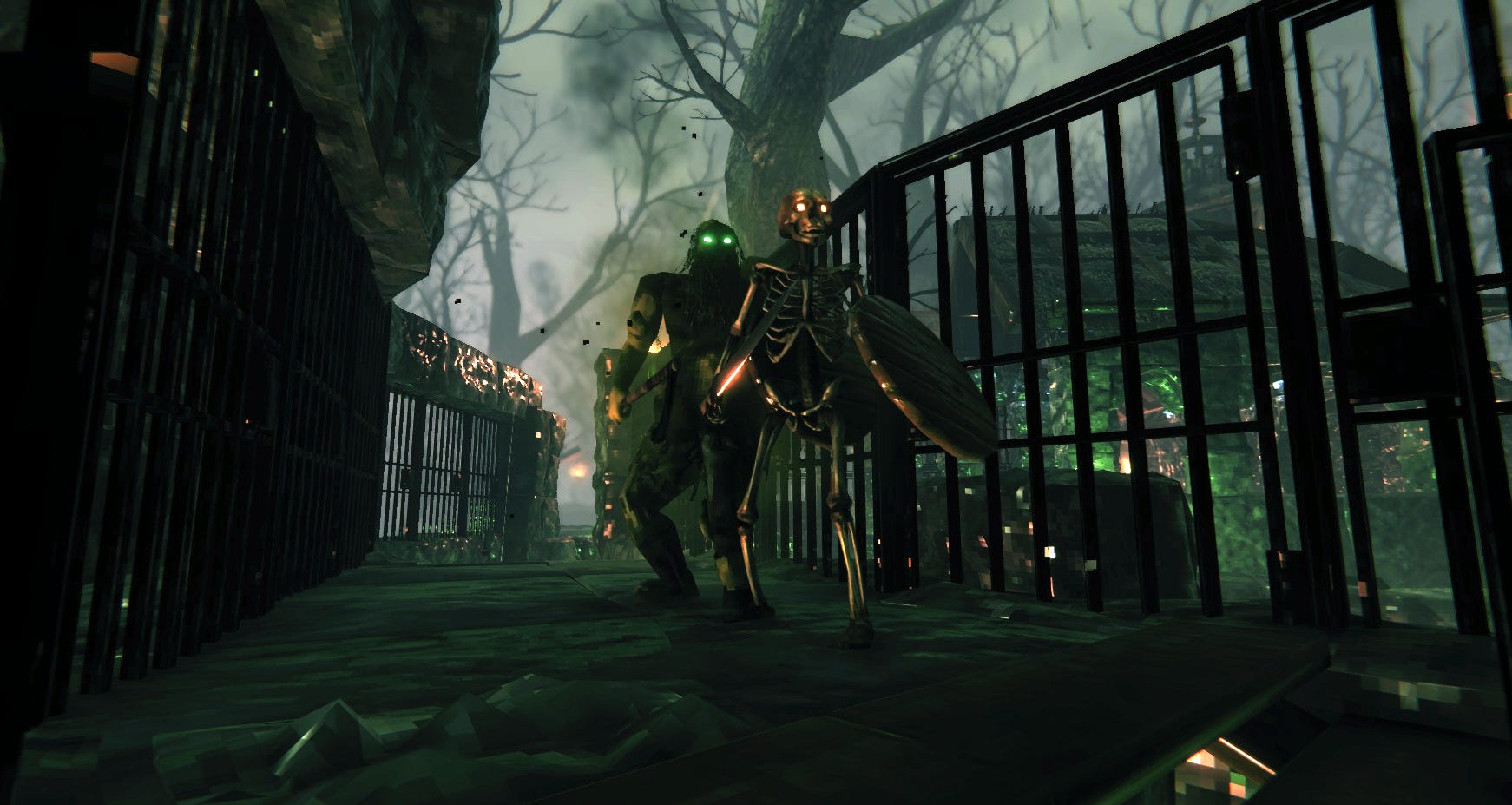
At first glance, the developers have provided a tidy piece of lore to be taken at face value. However, an inconsistency emerges: within Valheim’s own logic, the typical punishment for pride is to be stripped down to a skeleton as an afterlife state.
In fact, Skeletons are far more numerous in the Swamps than in the Black Forest barrows or mountain fortresses. The ‘Charred’ skeletons (Brända) and skeletal horrors like the Morgen from the Ashlands (Askländerna) also merit attention here. As former subjects of the Lord of the Emerald Flame, their fate echoes everything mentioned above, with one crucial distinction: this nation lost its afterlife not through pride or broken vows, but quite the opposite—out of absolute loyalty to a leader whom the gods themselves branded a traitor [*].
* According to the lore, the demise of the People of the Emerald Flame did not happen as a direct strike from the gods. Instead, it was triggered by a mysterious encounter between Fader and a certain Winter Child from the far northern realm of Fjärran Norden. Whether this alliance was a fatal miscalculation in their joint attempt to defy Odin, a premeditated trap laid out by the Æsir gods, or a deceptive intrigue orchestrated by the trickster Loki—players are just about to find out...
The Dual Nature of the Undead: Haugbui vs. Draugar
How, then, do these Viking revenants actually spawn? There is, of course, a common theory that Skeletons and corpses in this game represent the same undead at two different stages of decay—implying that Skeletons are simply Draugar who have existed for too long and completely rotted away. Yet perhaps the real answer lies deeper within the native folklore of the developers’ ancestors. After all, the sagas and Eddic poems transmit tales of two distinct types of aggressive undead:
The “grave-dwellers” or barrow-wights (Old Norse: Haugbui):
These dead awaken solely to guard their treasures. Their typical behavioral pattern is to transform into a serpent-like monster (meaning the classic motif of a dragon guarding gold is actually about a dead man). They are sentient, cunning, deceitful, and wield magic. The “active dead” (Draugar): These specters roam the world of the living—heavy, slow-witted, and ‘dark as Hel.’ They regularly return to the mortal realm and are prone to bizarre habits, such as riding on the roofs of houses (Ward, Christie L. 1996/2005). Unlike the Haugbui, these revenants usually seem completely out of their minds, acting as if they are ‘not all there’ (though legends contain plenty of exceptions) (see: Jakobsson, 2011; Kanerva, 2013).
Personally, I explain this cognitive disorientation through the fundamental cosmogony of Norse mythology. The key, in my view, lies in the specific loci of the realm of the dead.
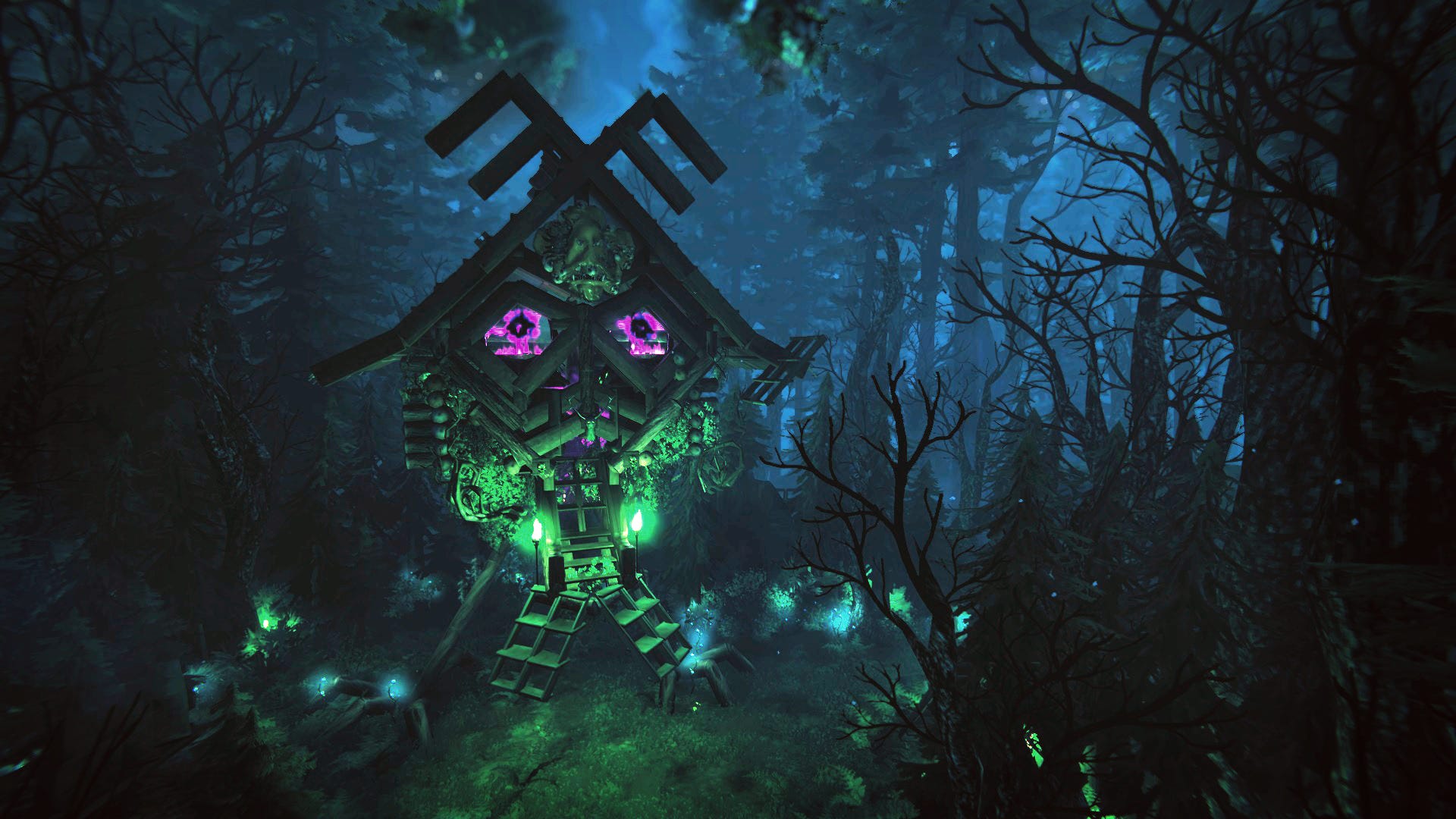
It is worth noting that the very concept of Hel originally encompassed the entire world of death; the banqueting halls of fallen heroes were merely one of its specific zones. The stark opposition between Hel and Valhalla is a late development—a direct response by the mature Viking Age to Christian ideology and its rigid division of the afterlife into ‘Heaven’ and ‘Hell’.
Another locus of the dead is known as the CorpseShore (O.-N.: Náströnd), where “perjurers, treacherous murderers, and adulterers” end up after death, trapped inside a structure with “the doors face north” woven from living serpents, eternally steeped in their venom. From time to time, the black dragon Níðhöggr visits this place to gnaw on the wretched:
There she saw wading swift currents
perjured people and murder-wolves,
and the one who seduces another’s wife;
there Niðhǫggr sucked the corpses of the deceased,
the wolf tore men. Would you know still [more], or what?
— Völuspá, 38 (Translated by Edward Pettit, 2023)
Consider this: this is the afterlife, so the monster is not ‘killing’ the punished—they are already dead. Yet this does not stop the beast from devouring them over and over again. Thus, we can hypothesize that these oathbreakers, recidivists, and adulterers are doomed to eternally experience agonizing pain—either from the venom or from the jaws of the underworld monster. How could one not lose their mind under such torture?
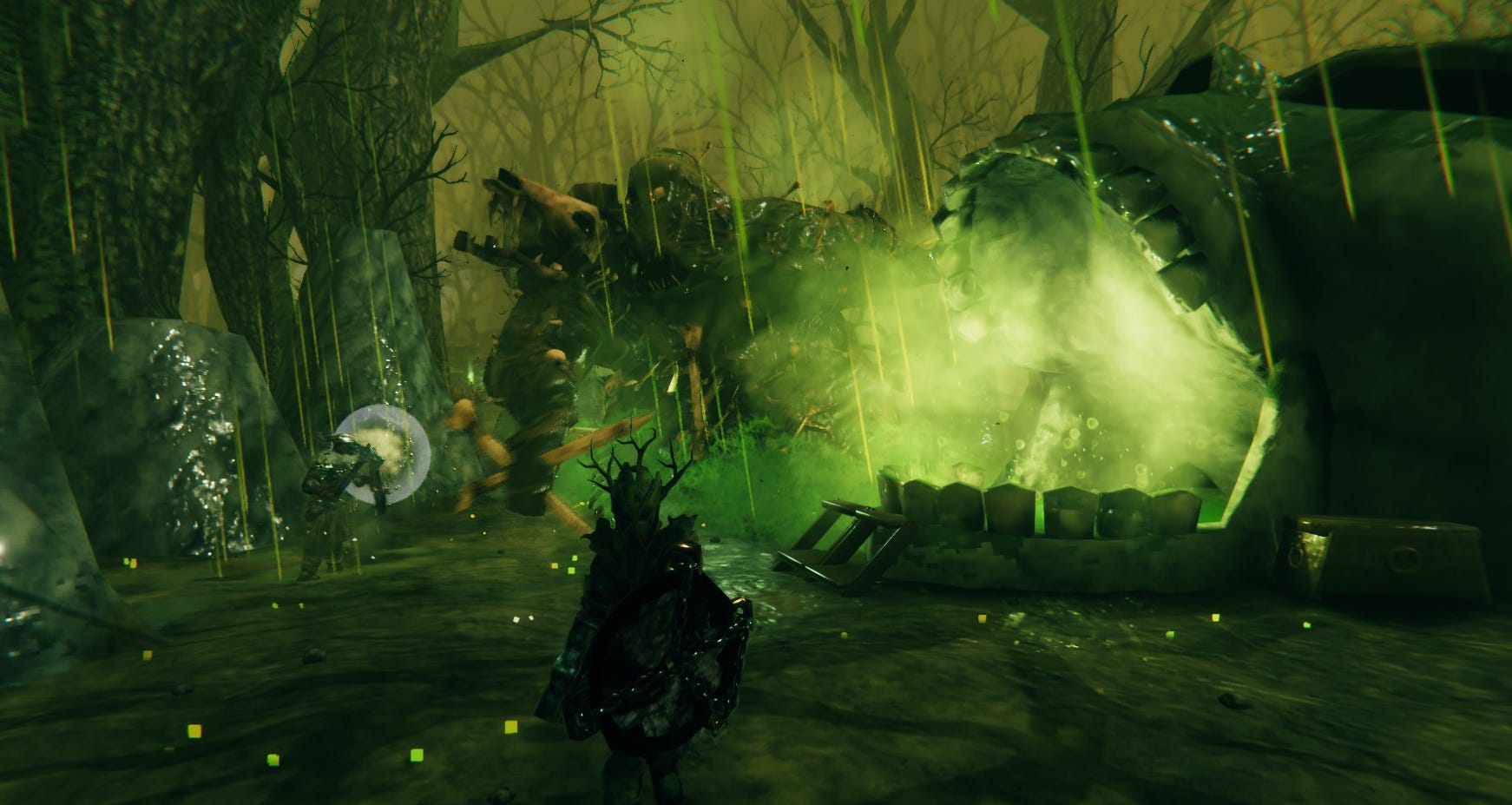
Comparative folklore demonstrates that, under certain magical practices or when the living violated specific taboos, a deceased individual gained a chance to re-enter their corpse in the external world (not necessarily even their own), inhabiting it much like biblical demons possessing the ‘demoniac.’ This perfectly accounts for the sensation that the reanimated person is somewhat semi-conscious, stumbling over their own limbs, and unable to fully comprehend what is happening. Yet they retain monstrous strength and an immense pool of aggression accumulated from their suffering.
This model of níð-scaping effectively unpacks the nature of the revenants in Icelandic sagas while shedding light on Valheim’s Draugar—even if the developers themselves never intended to dig quite that deep. Thus, unlike Skeletons, the Draugar do not walk after death due to the baseline curses of the Tenth World. Instead, they represent an escape from the Corpse Shores of Niflheim, where the community of the living likely banished those prideful, tower-building rebels.
However, it is through the necromantic force of Bonemass (Benmassan) that they regenerate physical form exclusively here in Valheim. They return to the realm of the living as the direct minions of this slime-creature—acting as a sort of post-mortem “Varangian Guard” of the Swamps. One runestone explicitly notes that the Draugar are fallen warriors too prideful for Valhalla, doomed to never find peace.
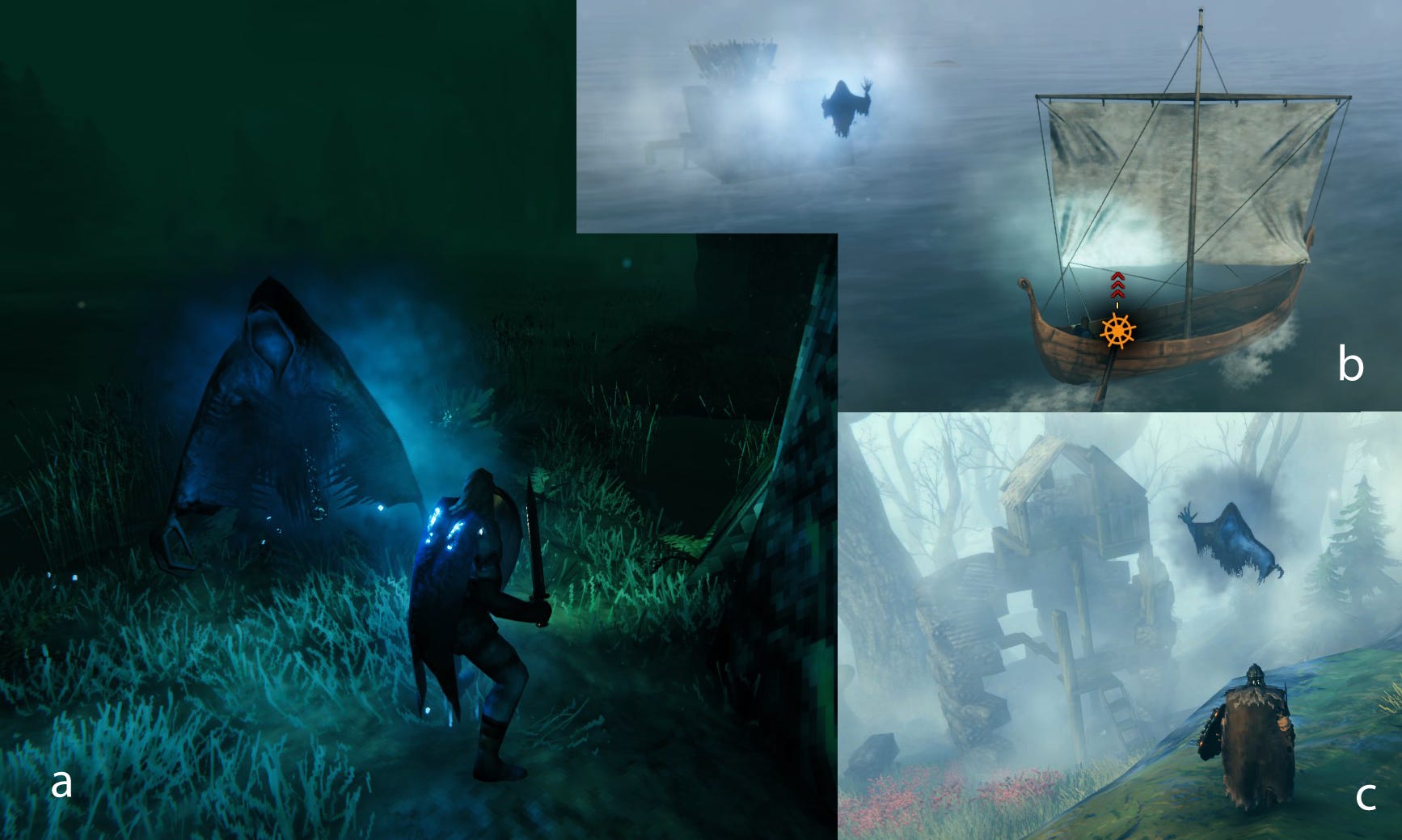
The Swamps also introduce Wraiths (Vandör or Gengångare). The lore states that they did not fight during their mortal lives, meaning the doors of Valhalla are barred to them. Yet, tethered to their abruptly cut short dreams and unfulfilled ambitions, they remain stuck within the ruins of their former homesteads—envious, bitter, and aggressively hostile. [*].
* Swamps runestone text: ‘Rest, wanderer, and consider the wraiths. We know that when a warrior dies, their soul cracks open and seeps into the earth around them, thereby to nourish new life and strengthen those who follow after. Yet if a warrior should die with no great deeds to their name, their soul will be too thin and airy. It will flow upwards instead, like smoke from a hearth. These wisps of souls sometimes catch in the branches of trees long enough to form wraiths, wretched shadows with nothing but bitterness and jealousy to drive them. Blown about the land in despair, they remain only to prey on those who are still living.
Should you see one, kill it and count it a mercy.’
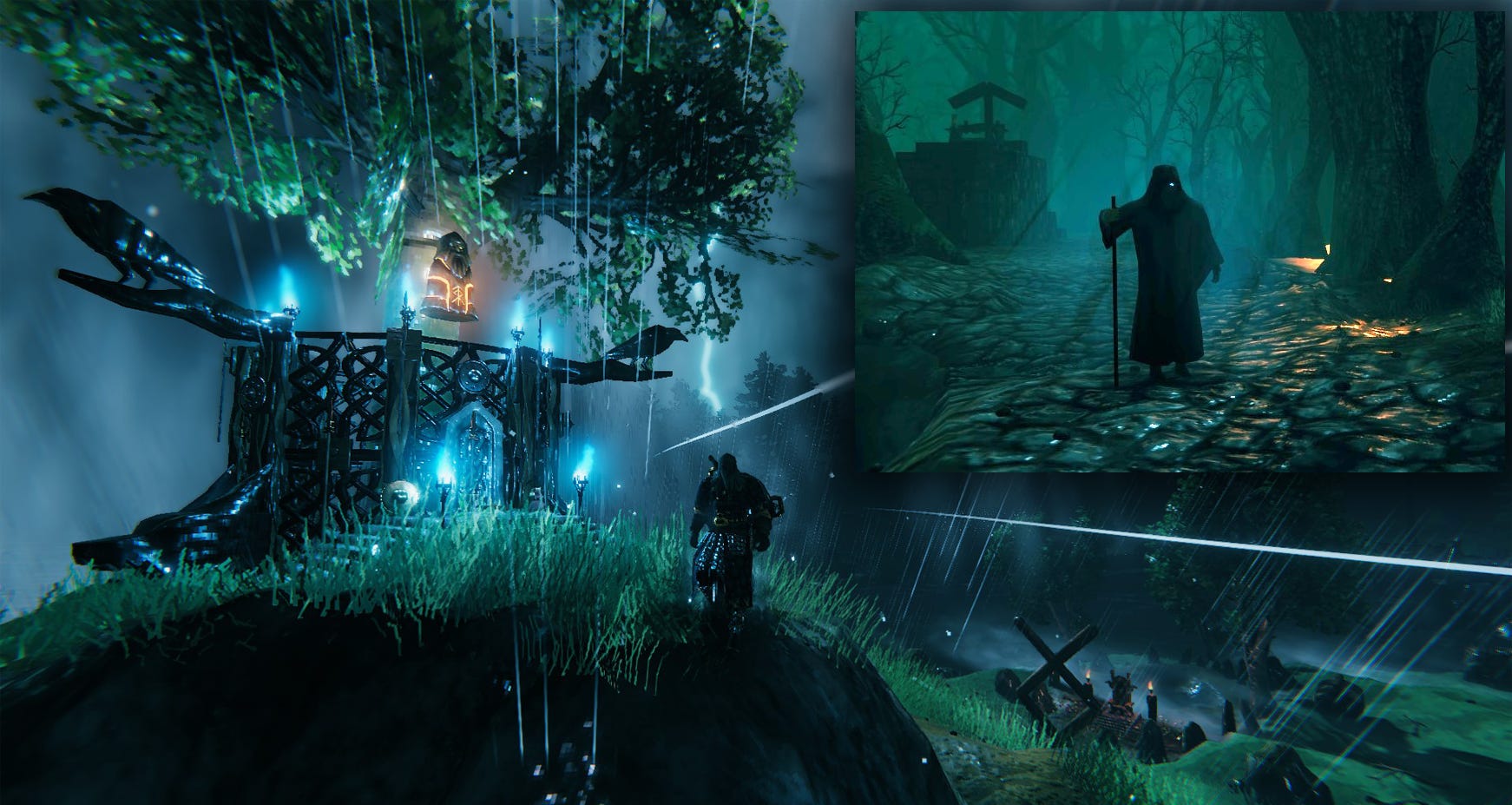
Aside from trolls, the undead, and Greydwarfs, the player is harassed by water-sprites or Nixes (Näckarna) in the starting Meadows, animate log-horrors called Abominations (Styggelserna) in the Swamps, and roaming Fenrings (Fenringarna) and drakes (Drakarna) in the frosty Mountains. It is a picture instantly recognizable to anyone familiar with Scandinavian folklore traditions (Visit Sweden, 2025).
On occasion, even the deities themselves manifest to the heroes—whether it is Thor tearing through the storm in his chariot or the one-eyed Allfather, Odin, silently watching from a distance.
The Mistlands Controversy: Serpents vs. Insectoids
The Mistlands (Dimmländerna) evoke a mixture of delight and deep bewilderment. On one hand, the landscape is scattered with the remnants of the Dvergar clans and the colossal bones of their ancient predecessors, the Jotnar. This is a natural given for anyone who draws a parallel between this biome and Niflheim (the ‘Realm of Mists’) in Eddic cosmogony. The Norse people historically tied their misty underworld to these specific mythic entities. The dwarves arrived at the graveyard of Odin’s ancient enemies, harvesting their magic-infused skeletal remains as raw materials and alchemical components. Woe to any adventurer who dares harvest those bones in the presence of the dvergar.
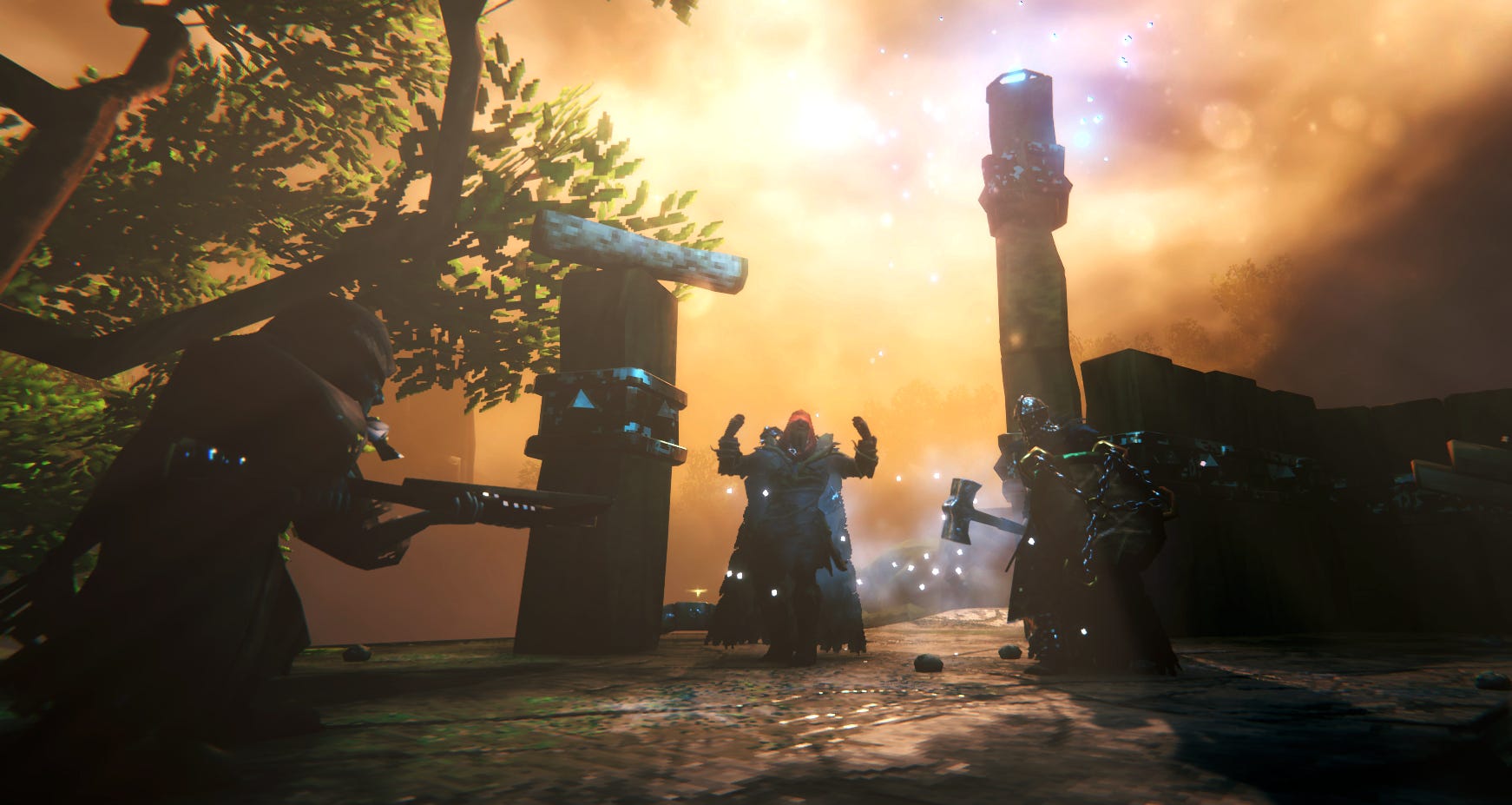
In turn, the dwarves mine these lands for black marble and extract the magical sap known as Eitr so relentlessly that, according to legend, their insatiable greed breached the subterranean depths. This action unleashed mutated, parasitic insects that supposedly once inhabited the pores of the World Tree, creatures whose very essence is sustained by this magical sap. Ironically, these insectoids are named Seekers (Sökare), and they now scour the Mistlands under the protection of the magical haze generated by their brood mother, The Queen (Drottningen). Most of the ancient black-marble dwarf citadels have long since been hollowed out and converted into insect nests.
For any connoisseur of the Old Norse worldview, this specific choice of enemy types is genuinely jarring. Mythological Niflheim is famous first and foremost for its serpent imagery. As established earlier, the dragon Níðhöggr, the serpentine transformations of the barrow-wights (Haugbui), and the venomous snakes of the Corpse Shore are the defining attributes of the Mistlands’ mythological counterparts. In fact, an archaic epithet for Niflheim and Náströnd is Ormgard—literally, “The Serpent Enclosure.” [*]
* This is a highly archaic epithet. By the Viking Age, the poetic phrase ‘Cast into Ormgard’—essentially meaning ‘slain by a cruel death’—came to be understood literally. Thus, according to legend, the Viking leader Ragnar Lodbrok was tortured in a Northumbrian pit filled with cobras and pythons, species that never existed in those lands. Similar depictions were made of the Nibelungian hero Gunnar, who murdered his blood brother, Sigurd the Dragon Slayer (Sigurðr Fáfnisbani).
Confronting insectoids instead of giant reptiles feels out of place here. One could wonder if someone on the development team simply suffers from severe ophidiophobia (fear of snakes).
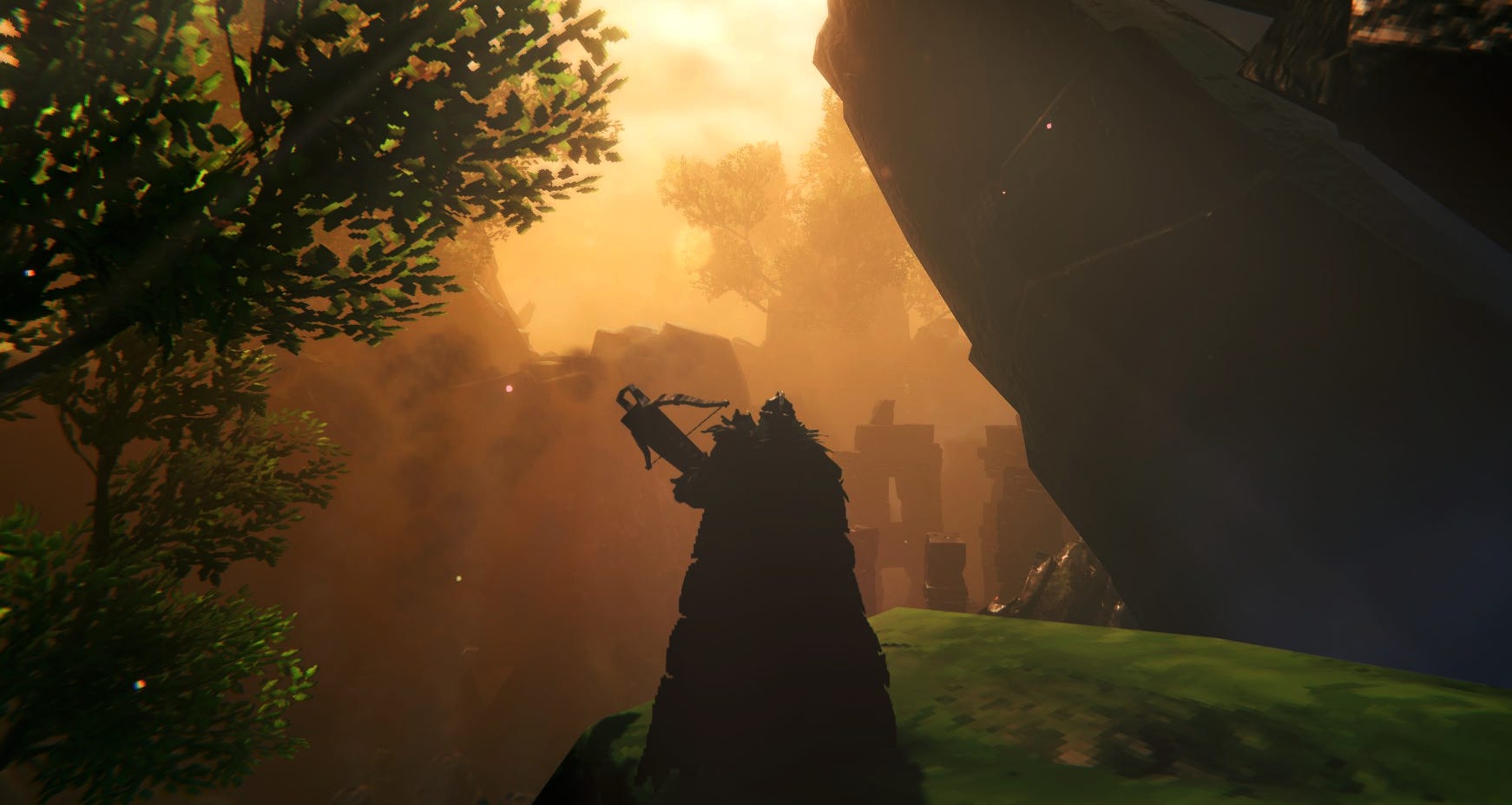
This creative choice makes the boss's encounter with The Queen ring hollow textually, despite the mechanical spectacle. The dead ruler awakening inside a barrow and taking on draconic or serpentine aspects to defend her treasure is a vital mythic trope—one that beautifully caps off the themes of the Mistlands. A battle in her lair should carry the epic weight of Beowulf or Bilbo Baggins confronting Smaug (an archetype J.R.R. Tolkien adapted directly from Germanic epic poetry).
Choosing bugs over serpents feels like a missed cosmological opportunity.
If this was intended as a postmodern subversion—a shrug of ‘serpents are too cliché, everyone has seen them’—I personally view it as a misstep that breaks the internal consistency of the cultural code.
Conclusion: An Algorithm for the Future
Ultimately, the power of Valheim lies in the fact that its mythological imagery feels entirely organic and unforced. A player can submerge themselves completely into its depths without knowing a single thing about Viking history or Eddic poetry. This masterfully executed setting has captivated millions across the globe. It has drawn far more mainstream attention to the “survival-building exploration” genre than Minecraft, Conan: Exiles, or No Man’s Sky combined. While those projects are undeniably brilliant and pathbreaking, the massive cultural surge in this genre tracks directly to 2021—a shift I attribute directly to Iron Gate’s release.
This effortless immersion into a profound, multifaceted, and raw layer of national lore serves as Sweden’s cultural calling card to players worldwide—reaching far beyond the Atlantic sphere into Asia, Africa, and Latin America.
For nations seeking global recognition and a deeper international understanding of their unique identities, Valheim provides a flawless blueprint for the gaming industry. The lesson here is not to blindly copy Valheim’s mechanics or plaster an aesthetic veneer onto an existing template. Rather, it is about understanding their structural success.
What we need is a quality “algorithm,” not a copied “recipe.”
Thank you for your attention.
Disclaimer 1: This essay was originally published in Ukrainian on Gamedev.dou.ua
Disclaimer 2: All provided screenshots represent the author's direct gameplay experience and were captured by him. Any subsequent reuse must explicitly credit the source. Thank you in advance.
References
Ellis(-Davidson) H. R. (1968). The Road to Hel : a Study of the Conception of the Dead in Old Norse Literature. N.-Y. : Greenwood Publishers.
iVoodoo (2023). “Огляд Valheim/Вальгайм (ранній доступ). Скандинавська атмосфера, бойові комарі та українська локалізація.” Gamedev.dou.ua.
Jakobsson, Ármann. (2011). “Vampires and Watchmen: Categorizing the Mediaeval Icelandic Undead.” The Journal of English and Germanic Philology, 110(3): 281-300.
Kanerva, Kirsi. (2013). “Messages from the otherworld: The roles of the dead in medieval Iceland.” In Deconstructing Death. Changing Cultures of Death, Dying, Bereavement and Care in the Nordic Countries: 111-130.
Mayburd, Mariusz. (2014). “The Hills have Eyes: post-mortem Mountain Dwelling and the (Super) Natural landscape in the Íslendingasögur.” Viking and medieval Scandinavia (10): 129-154.
Pettit, Edward. (2023). The Poetic Edda: A Dual-Language Edition (p. 894). Open Book Publishers.
Visit Sweden. (2025). “Spirits, trolls, elves and ‘näcken’ – discover Sweden’s mythological creatures.” Visit Sweden.
Ward, Christie L. (1996/2005). “The Walking Dead: Draugr and Aptrgangr in Old Norse Literature.” Viking Answer Lady.
WinrothAnders. (2021). “Real Viking Professor Reviews Valheim.” BuzzFeed Multiplayer.